

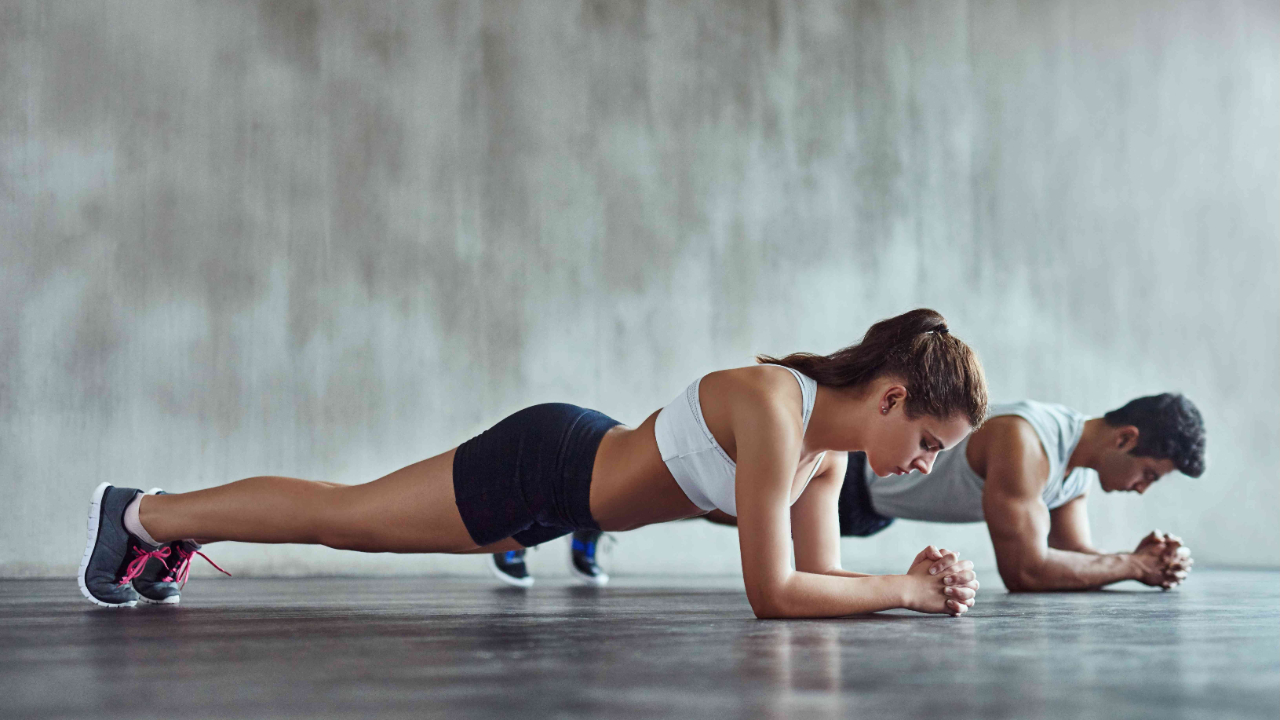
For decades, mainstream fitness culture focused heavily on aesthetics and isolated muscle hypertrophy. Gym routines were dominated by fixed-trajectory machines designed to target a single muscle group, such as the biceps curl bench or the seated leg extension machine. While these exercises are highly effective for building localized muscle mass, they often fail to prepare the human body for the unpredictable physical demands of everyday life.
Understanding the Neuromuscular Foundation
To understand why functional fitness is so effective, it is necessary to examine how the brain controls human movement. The central nervous system does not think in terms of individual muscles; it thinks in terms of movement patterns. When you reach down to pick up a heavy box, your brain does not send separate, isolated commands to your hamstrings, glutes, spinal erectors, and abdominals. Instead, it recruits a global motor pattern known as a hip hinge.
Traditional weight training machines artificially stabilize the body, which removes the need for the central nervous system to engage stabilizing muscles. For example, when using a seated leg press machine, the machine dictates the path of the weight, and the back pad supports the spine. This allows the individual to move heavy loads using their quadriceps and glutes, but it largely bypasses the core, hip stabilizers, and ankle stabilizers.
In contrast, a functional movement like a barbell or kettlebell squat forces the body to create its own stability. The neurological demand is significantly higher because the brain must constantly monitor balance, joint positioning, and spinal alignment in real time. This active stabilization recruits small, deep muscle groups, such as the rotator cuff in the shoulders and the transversus abdominis in the core, which are essential for protecting joints from acute and chronic injuries.
The Tri-Planar Reality of Human Movement
Biomechanical science divides human movement into three distinct spatial planes. Traditional gym routines frequently overemphasize exercises that take place in just one of these planes, leading to structural imbalances and an increased risk of injury during real-world activities.
-
The Sagittal Plane: This plane divides the body into left and right halves. Movements involve forward and backward motions, such as walking, running, bicep curls, and standard squats. The vast majority of conventional gym exercises take place exclusively in the sagittal plane.
-
The Frontal Plane: This plane divides the body into front and back sections. Movements involve side-to-side motions, such as lateral lunges, jumping jacks, or lifting your arms out to the sides.
-
The Transverse Plane: This plane divides the body into top and bottom halves. Movements involve rotational actions, such as swinging a golf club, throwing a ball, or twisting the torso to look behind you.
Real-life tasks are rarely confined to a single plane; they are inherently tri-planar. If you reach across your body to grab a heavy suitcase from a luggage carousel and lift it while turning, you are simultaneously operating in the sagittal, frontal, and transverse planes. If your fitness routine only trains your body to move forward and backward under a predictable load, your neuromuscular system will be poorly prepared to handle the sudden rotational and lateral forces encountered in daily life. Functional fitness prioritizes multi-planar training to ensure that joints are stable and muscles are strong through every possible angle of motion.
The Seven Fundamental Movement Patterns
Functional training is organized around foundational movement patterns rather than anatomical muscle groups. By mastering these seven fundamental human movements, individuals can build a base of physical capability that translates directly to any daily or athletic task.
1. The Squat
The squat is a lower-body movement pattern that involves bending at the hips, knees, and ankles simultaneously. In daily life, this pattern is executed every time you sit down in a chair, get up from the toilet, or lower yourself to get into a car. From a mechanical standpoint, a proper squat requires excellent mobility in the ankles and hips, combined with rigid stability in the lumbar spine. Training this pattern strengthens the quadriceps, hamstrings, glutes, and core, ensuring that the lower-body joints can safely absorb and produce force.
2. The Hinge
While a squat emphasizes knee flexion, a hip hinge focuses on bending forward from the hips with minimal knee bend, keeping the spine neutral. This pattern is the kinetic engine behind lifting objects directly from the ground, such as picking up a pet, lifting a laundry basket, or performing deadlifts. The hip hinge primarily targets the posterior chain, which includes the glutes, hamstrings, and lower back muscles. Developing a strong hip hinge is one of the most effective ways to protect the lower back from strain, as it teaches the body to lift heavy objects using the powerful muscles of the hips rather than the delicate structure of the lumbar spine.
3. The Lunge
The lunge is a single-leg movement pattern that requires one leg to be positioned ahead of or to the side of the other. Because life is often lived on one leg at a time during activities like walking, running, climbing stairs, or stepping over obstacles, single-leg strength is critical. Lunges mimic these unilateral demands and are exceptionally valuable for exposing and correcting strength and flexibility imbalances between the left and right sides of the body. Additionally, lunges challenge lateral stability, forcing the gluteus medius and core to work harder to prevent the hips from tilting.
4. Push
Pushing movements involve moving a load away from the body or pushing the body away from an object. This pattern can be broken down into horizontal pushing, such as a push-up or bench press, and vertical pushing, such as placing an item onto a high overhead shelf. Pushing movements develop the chest, shoulders, and triceps, while demanding baseline stabilization from the shoulder girdle and core to ensure the joints remain in an optimal tracking position.
5. Pull
Pulling movements involve drawing a resistance toward the body or pulling the body toward an object. Like pushing, pulling occurs horizontally, such as rowing an object toward your chest, or vertically, such as pulling open a heavy door or performing a chin-up. Training the pulling pattern is vital for modern structural health. Because many people spend hours hunched over desks and steering wheels, the posterior muscles of the upper back can become weak and overstretched. Regular functional pulling exercises strengthen the rhomboids, latissimus dorsi, and rear deltoids, which helps restore optimal posture and shoulder health.
6. Rotation
Rotational movements involve twisting the torso against resistance, while anti-rotational movements involve actively resisting an unwanted twisting force. This pattern relies heavily on the core, specifically the internal and external obliques. Rotational capacity is vital for athletic performance and basic daily tasks like shoveling snow, throwing a ball, or swinging a tool. Anti-rotational strength is equally essential for spinal safety, as it teaches the core to lock down and protect the vertebrae when sudden, unexpected external forces try to twist the spine.
7. Gait or Carry
Gait refers to the mechanics of walking, jogging, or running. In functional fitness, this pattern is often extended to include loaded carries, such as farmers walks, where an individual holds heavy weights and walks for a set distance. Loaded carries are a definitive functional exercise. They require total-body tension, grip strength, shoulder stability, and immense core endurance to maintain an upright, aligned posture while moving. This transfers directly to carrying heavy suitcases, balance control, and long-term joint resilience.
Designing a Balanced Functional Routine
Transitioning to a functional fitness methodology requires shifting focus away from bodypart splits toward movement-based training sessions. A comprehensive functional workout should integrate several of the fundamental movement patterns, utilizing a combination of body weight, free weights, resistance bands, cable systems, and unstable surfaces.
Progressive overload remains a core principle, but instead of merely adding more weight to a machine, functional progression often involves increasing the complexity of the movement. For instance, an individual might progress from a stable two-legged bodyweight squat to a goblet squat holding a kettlebell, then to a unilateral split squat, and eventually to a dynamic lateral lunge. This progression systematically builds strength while continuously challenging the nervous system to adapt to greater balance and coordination demands.
Frequently Asked Questions
How does functional fitness differ from traditional bodybuilding?
Traditional bodybuilding primarily focuses on isolating specific muscles to maximize size and symmetry, often using machines that fix the path of motion. Functional fitness focuses on training multi-joint movement patterns to improve how the body moves and performs as an integrated system in real-world scenarios.
Can beginners start with functional fitness or is it too advanced?
Functional fitness is highly scalable and appropriate for all fitness levels. A beginner might start with fundamental bodyweight variations, such as squatting to a chair or performing push-ups against a wall, before progressing to advanced free-weight or single-leg variations as their mobility and stability improve.
How does functional training help prevent everyday injuries?
By training muscles to work together and emphasizing core stability and multi-planar movement, functional training eliminates structural weaknesses. It strengthens stabilizing muscles and improves joint tracking, which helps the body safely handle sudden or awkward physical stressors in daily life.
Do I need a gym membership with specialized equipment to practice functional fitness?
No, functional fitness can be practiced anywhere. While tools like kettlebells, sandbags, and suspension trainers are excellent, many functional movements rely entirely on body weight, gravity, and everyday objects to create resistance.
How many times a week should someone perform functional fitness workouts?
For most individuals, performing functional fitness training three to four times per week provides an optimal balance between systemic stimulus and recovery, allowing the neuromuscular system time to adapt and repair.
Is functional fitness effective for fat loss and body composition changes?
Yes, because functional exercises utilize large compound movements that recruit multiple major muscle groups simultaneously, they require a high amount of energy expenditure. This makes them highly effective for burning calories and building lean muscle mass.
How does functional fitness affect flexibility and joint mobility?
Unlike static stretching, functional training improves mobility by moving joints through full, active ranges of motion under load. This builds strength at the end-ranges of motion, leading to lasting improvements in both flexibility and joint control.