

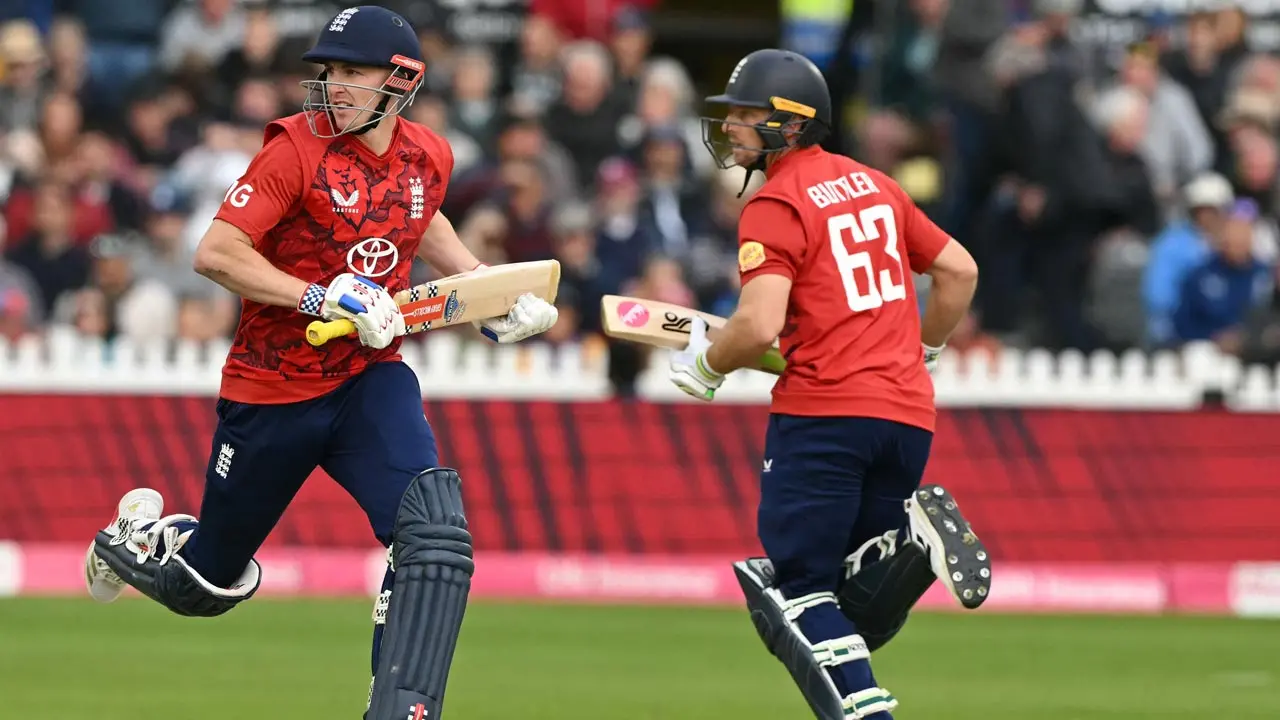
While batting masterclasses and devastating bowling spells often dominate the post-match headlines, fielding is frequently the true deciding factor in competitive cricket. In a sport where matches can be decided by a single run or a solitary wicket, defensive precision on the field exerts immense pressure on the batting side. Modern cricket demands that athletes possess a combination of explosive speed, sharp spatial awareness, and flawless physical mechanics.
Excellent fielding does more than just prevent boundaries and secure dismissals. It changes the psychological dynamic of the game. When a fielding unit stops certain runs, creates uncertainty with rapid returns, and converts half-chances into wickets, batsmen become hesitant. This hesitation disrupts the flow of runs, forces tactical errors, and provides bowlers with a distinct psychological advantage. Elevating a team’s fielding from adequate to elite requires a deep understanding of specific physical mechanics and spatial strategies across different zones of the cricket ground.
The Athletic Base: The Ready Position and Anticipation
Flawless fielding mechanics begin well before the ball is struck by the batsman. The foundation of any successful defensive action is the ready position. A fielder who is stationary or poorly balanced when the ball meets the bat will suffer from delayed reaction times, conceding valuable meters to the moving ball.
To adopt an optimal ready position, fielders must keep their feet slightly wider than shoulder-width apart, with their weight distributed evenly on the balls of their feet. The knees should be softly bent, and the hands should rest relaxed in front of the body, around waist height. As the bowler approaches the crease to deliver the ball, the fielder should perform a small walking step or a subtle split-step forward. This movement creates forward momentum, pre-activating the neuromuscular system and allowing the athlete to move quickly in any direction the moment the ball is hit.
Anticipation bridges the gap between raw physical speed and elite execution. By observing the batsman’s footwork, body alignment, and blade angle during the downswing, an experienced fielder can predict the trajectory of the ball a fraction of a second before impact. For instance, if a batsman shifts their weight heavily onto the back foot and opens the face of the bat toward the off-side, fielders in the backward point or gully regions must mentally prepare for a sharp, high-velocity square cut.
Infield Mechanics: Attacking the Ball and the Slide
The primary objective of the inner-ring fielders is to restrict singles, apply scoreboard pressure, and engineer run-out opportunities. Accomplishing this requires a proactive approach known as attacking the ball, rather than waiting for the ball to travel to the fielder.
When a ground ball is hit into the infield, the fielder must sprint toward it at an angle that cuts off its trajectory. As the fielder approaches the ball, they must lower their center of gravity, placing the non-throwing side foot next to the line of the ball. The hands must form a large, open cup on the ground, with the fingers pointing downward into the turf. Gathering the ball on the inside of the foot stabilizes the body and establishes a clean line of sight, drastically reducing the risk of a misfield caused by an irregular bounce.
The Art of the Sliding Stop
In modern cricket, the sliding stop has transitioned from an advanced luxury to a fundamental requirement. Sliding allows an infielder or outfielder to track down a fast-moving ball and return it to the infield while minimizing the time spent decelerating.
To execute a safe and effective slide, the fielder must approach the ball at a sprint, then lower their hips and slide on the outer side of their thigh and knee closest to the ground. The lead leg is extended slightly forward to block or trap the ball, while the trailing leg tucks safely behind. Fielders must avoid sliding directly on their knees or forcing their spikes into the ground, as this can cause severe joint injuries. The slide should be a fluid, continuous motion that allows the player to gather the ball, pop back up onto their feet, and transition into a throwing motion in one sequence.
The Science of High and Flat Catching
Catching remains the most direct way a fielder can influence the outcome of a match. A dropped catch can cost a team dozens of runs, making technical consistency under pressure paramount.
High Catching Technique
High catches, often seen in the outfield when a batsman mistimes a lofted shot, require immense concentration and spatial control. The golden rule of high catching is to get settled underneath the ball as early as possible. Running backward while looking up at the sky compromises balance and spatial orientation. Fielders should use lateral sidesteps or a cross-over sprint to get into position, ensuring their head is completely still directly beneath the descending ball.
The hands should be positioned high, around forehead level, creating a basket shape with the pinky fingers touching or the thumbs aligned. This high hand placement ensures that if the ball pops out of the hands, the fielder has a split second to react to a secondary rebound chance. As the ball enters the palms, the fielder must absorb the impact force by drawing their hands down toward their chest. This reverse cushioning mechanism prevents the ball from bouncing off the hard surfaces of the palms.
Flat Catching and Slip Fielding
In contrast to high catches, flat catches and slip catches occur at high velocities closer to the bat. Slips and close-in infielders have less than half a second to react to an edge.
For close-range catching, the stance must be lower, with the hands held below the waist, fingers pointing downward. This orientation is crucial because it is structurally faster to raise relaxed hands to catch a high ball than it is to drop high hands to catch a low ball. The eyes must track the ball from the bowler’s hand, through the air, and onto the edge of the bat. When an edge occurs, the fielder should soft-hand the catch, allowing the ball to nestle into the fingers without pushing out rigidly toward it.
Outfield Boundaries and Defensive Throwing Mechanics
Outfielders are the final line of defense against boundaries. Their role requires exceptional conditioning, an accurate arm, and a calculated understanding of throwing angles.
When fielding near the boundary rope, a player must master the boundary intercept. If the ball is heading toward the rope, the fielder must judge whether a slide or an upright pickup is safer. If the ball cannot be cleanly gathered before crossing the boundary, the fielder must utilize a tap-back maneuver, diving horizontally to slap the ball back into the field of play before any part of their body contacts the boundary foam or rope.
Once the ball is secured in the outfield, the return throw must be executed with maximal efficiency. For long-distance returns, the bowler’s crow-hop technique is utilized:
-
As the ball is gathered, the fielder takes a dynamic hop-step with their rear foot, shifting their body weight entirely onto the driving leg.
-
The non-throwing arm points directly at the target, acting as a guide and a counterbalance.
-
The throwing arm draws back in a long, clean arc, releasing the ball at a high overhand release angle to maximize distance and velocity.
Outfielders must always aim for a flat, powerful throw that arrives either on the full to the wicketkeeper’s gloves or as a sharp, one-bounce delivery directly over the stumps. High, looping throws take too long to travel through the air, giving batsmen ample time to complete tight runs.
Frequently Asked Questions
What is the difference between an orthodox and an unorthodox catching cup?
The orthodox cup involves joining the pinky fingers together with the fingers pointing upward or outward, which is ideal for catches taken at shoulder height or above. The unorthodox cup, often called the reverse cup, involves crossing the thumbs with the fingers pointing downward, which is highly effective for low catches and slip fielding.
Why do close-in fielders wear helmets while outfielders do not?
Close-in fielders, such as those at silly point or short leg, stand mere yards away from the batsman. At this proximity, a powerfully struck ball can travel at speeds exceeding ninety miles per hour, leaving the fielder with no time to react. Helmets and shin guards are essential protective gear to mitigate life-threatening impact injuries.
How do fielders adjust their positioning based on the wind?
Wind significantly alters the trajectory of high balls in the outfield. If the wind is blowing hard across the ground, a lofted ball will drift sideways during its descent. Outfielders must calculate this drift, positioning themselves slightly downwind of the ball’s initial projected landing spot to avoid being caught out of position.
What makes the backward point position one of the most difficult spots on the field?
Backward point requires exceptional reflexes because it receives high-velocity square cuts and slices off the fast bowlers. The ball often spins, curves, or rises unexpectedly at this angle, demanding lateral agility and excellent short-range flat catching skills.
How does a wet outfield impact fielding tactics and mechanics?
A wet outfield makes the leather cricket ball slick and heavy, which reduces the effectiveness of spin and makes catching difficult. Fielders must avoid sliding excessively to prevent tearing up the soggy turf, and they must place an extra emphasis on reverse-cushioning catches to ensure the slippery ball does not pop out.
What is the purpose of the backing up technique during a run-out attempt?
Backing up occurs when fielders position themselves behind the stumps opposite the side from which the ball is being thrown. If the throw misses the stumps or the wicketkeeper fails to gather it, the backing-up fielders collect the ball, preventing overthrows and stopping the batsmen from taking extra runs.